City study 02
The town that began as a crossing
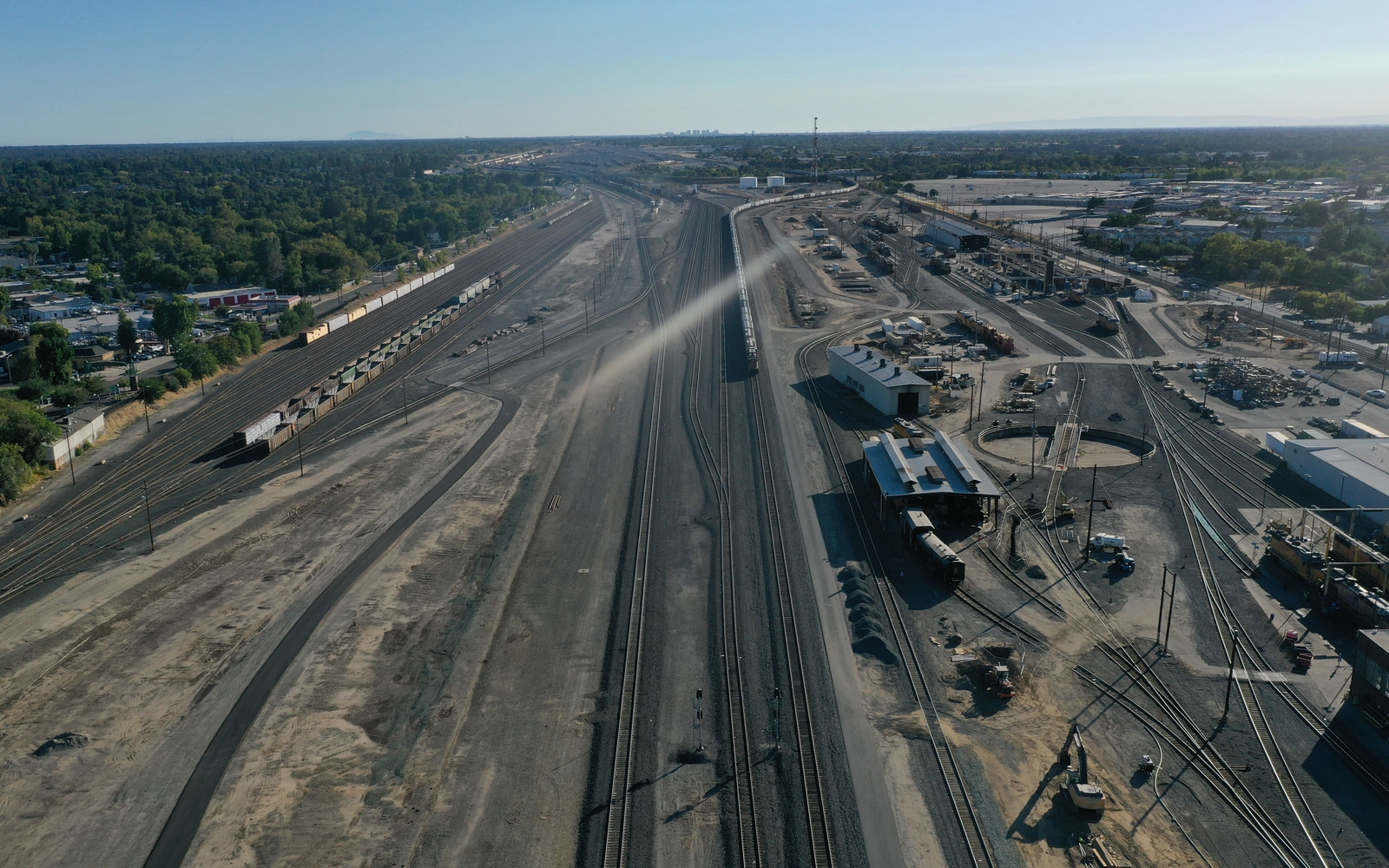
The City of Roseville publishes a history of the city written by Leonard “Duke” Davis, a founding member of the Roseville Historical Society and, the city says, considered by many the foremost authority on the history of Roseville. Its account of how the place got its start is a single crossing. In 1864 a track-laying crew from the Central Pacific Railroad came eastward across the plains from Sacramento, building the western half of the nation’s first transcontinental railroad. They crossed a small rail line that linked the young towns of Lincoln and Folsom, and gave the spot what the city’s own history calls the unimaginative name of Junction.
For the next forty years Junction evolved into Roseville, a small trading center for area farmers, greatly overshadowed in those days by its neighbor to the north, Rocklin, where the Southern Pacific Railroad maintained its Roundhouse facilities. Then, in 1906, with the goal of expansion, Southern Pacific moved its facilities to Roseville — opening the door, the history says, for Roseville to one day host the largest railroad switching yards west of the Mississippi.
What arrived above ground after the tracks
The buildings followed the payroll. The City of Roseville was officially incorporated in 1909, and the new council promptly hired the city’s first City Marshal to address the issues arising from the recent relocation of Southern Pacific facilities and workers. In the three years between 1911 and 1914 the citizens of Roseville erected more than one hundred structures. In 1913, the city’s history records, the largest ice manufacturing plant in the world was built here to chill fruits and vegetables being shipped from California to other parts of the country. The Roseville Telephone Company was formed in 1914. By 1929 the railroad employed nearly 1,500 people in its Roseville yard, assembling trains, repairing engines and handling freight.
The Depression hit Placer County as hard as the rest of the country, and more than 2,000 of Roseville’s unemployed found work through the Federal Works Progress Administration paving streets, pouring sidewalks and building storm drains. Many sidewalks in the older sections of the city, the history notes, still carry “WPA” embossed in the concrete. It is a rare thing to be able to date a neighborhood by looking down.
An old street, and the number on the declarations page
A house standing on one of those older blocks raises a question that has nothing to do with what it would fetch. The Department of Insurance puts it plainly: the dwelling limit should be the amount it would cost to replace your home, and this may have nothing to do with the purchase price or the current market value, because homeowners insurance does not generally cover the value of the land upon which your dwelling sits. The figure to work toward is the cost of labor and materials needed to rebuild, not a movement in the real estate market.
The Department’s practical advice for keeping that figure honest suits an older house especially well: know the replacement cost of your home and be familiar with the building materials that make it up; stay informed about current building costs in your area; keep accurate records of updates, renovations and improvements and save receipts and samples where you can; review the dwelling limit initially and again at renewal, and put any discussion of changes to the house in writing. It also names an endorsement that a house built long before the current code will feel first — building code upgrade coverage, which the Department says can greatly add to your protection in the event of a loss.